Antimicrobial resistance – AMR – is one of the most serious global health challenges of our time. It occurs when bacteria, viruses, fungi or parasites evolve so that medical drugs become less effective against them. As resistance grows, common infections become harder to treat and routine medical procedures become more dangerous. As things stand, over the next 25 years an estimated 39 million people will die from drug resistant pathogens.
Tackling a global challenge together
Through a five-year £1.5m programme starting in 2024 and led by the University of Warwick and its UK and Japan partners, our Foundation is supporting long-term UK–Japan collaboration aimed at strengthening the global response to AMR. Our programme seeks to improve the wider ecosystem around antimicrobial discovery and use, fostering the conditions that will ultimately lead to better health outcomes.
The programme brings together partners including the Sir Howard Dalton Centre at the University of Warwick, the Institute of Development Studies (IDS), the UK Health Security Agency (UKHSA), and the Japan Institute for Health Security (JIHS).
“Together, we have built a programme where impressive thought leaders like Dr Alicia Demirjian and Dr Nobuaki Matsunaga influence the system-level change we need to realise in global antimicrobial resistance policy.”
Professor Chris Dowson, Co-Director of the Sir Howard Dalton Centre
Developments in 2025
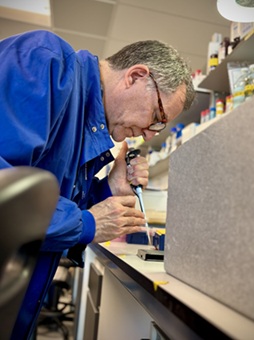
2025 was a key year in the five-year programme, with GBSF funding enabling two dedicated policy fellowships focused on strengthening international collaboration and improving the systems that support antimicrobial innovation and policy development. In the UK, Dr Alicia Demirjian served as the Dame Sally Davies Fellow, while in Japan Dr Nobuaki Matsunaga undertook the Mr Yasuhisa Shiozaki Fellowship. Working with partners including UKHSA and JIHS, the fellows explored how researchers, funders, regulators, clinicians and pharmaceutical companies can collaborate more effectively to address the global AMR challenge.
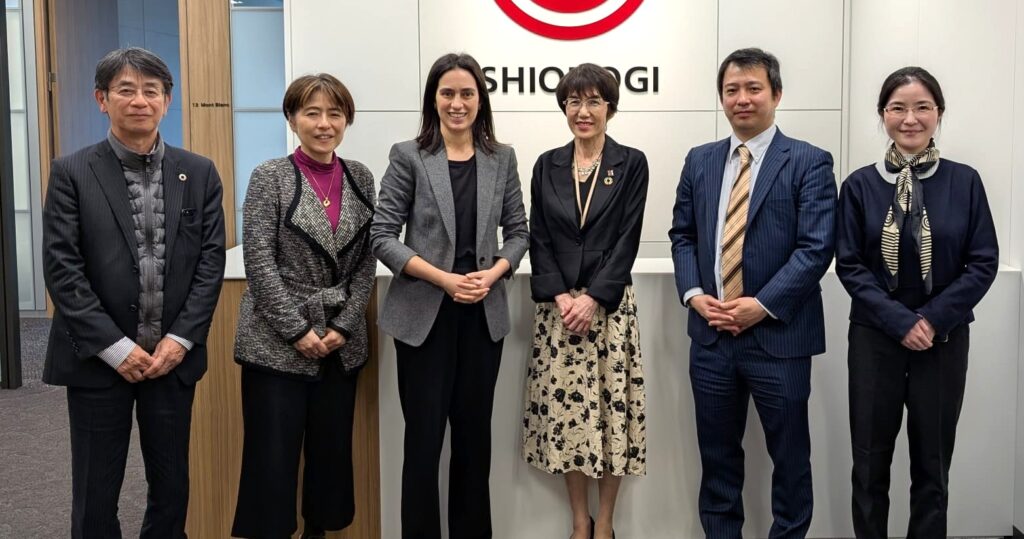
In February 2025, the fellows joined colleagues from Warwick and IDS for a programme visit to Osaka and Tokyo and the inaugural AMR Policy Fellowship Workshop, where achievements and emerging recommendations were shared with partners and stakeholders. Meetings also took place with Shionogi and Kitasato University, strengthening relationships between scientific, clinical and commercial partners in both countries. Interviews with both fellows later featured on NHK World Japan as part of a television feature examining the growing urgency of antimicrobial resistance.
The year also saw important policy and research outputs. Dr Matsunaga co-authored a major report on Japan’s antimicrobial drug discovery ecosystem, now regarded as an important reference point for policymakers in Japan. In the UK, Dr Demirjian contributed to a policy brief through the GBSF-supported Leadership in Enhancing Antimicrobial Discovery (LEAD) coalition, outlining recommendations for a more coordinated and strategically led public-sector response to antimicrobial discovery. Alongside this work, discovery-focused collaborations continued between Warwick and Kitasato University, including research using microbial strains from the internationally significant Ōmura collection.
“In the last year, we’ve learnt more about global innovation ecosystems, to understand how drug development could be improved for infections that are difficult to treat. We are also forging some excellent relationships between our organisations, the UK Health Security Agency and the Japanese Institute for Health Security.”
Dr Alicia Demirjian, Dame Sally Davies Fellow
Looking to the future
Through this programme, GBSF is helping create the conditions for lasting international leadership on AMR, built on stronger institutional relationships, policy recommendations, collaborative research networks and greater public awareness.
The programme is also showing encouraging signs of wider international interest. Alongside collaboration between UK and Japanese institutions, links are developing with wider academic, regulatory and industry networks, including the Japan-led ARISE partnership across Southeast and East Asia. Dialogue has also grown with policymakers, regulators and pharmaceutical stakeholders in both countries, while scientific exchanges between Warwick and Kitasato University continue to strengthen long-term research ties.
The longer-term ambition is to help build models of international co-operation capable of responding more effectively to global health challenges. Conversations emerging from the programme are already helping encourage new partnerships beyond the UK and Japan, including with stakeholders in India and China. Through sustained support for collaboration, policy development and scientific exchange, GBSF is helping the UK and Japan contribute to a stronger and more internationally connected response to antimicrobial resistance.